
Farm Cover Insurance :: News
SHARE

Share this news item!

Locust Hatchings Put Crop Risk and Policy Wording in Focus

North-west Victorian reports are a reminder that pest outbreaks can create costs before any claimable loss is clear

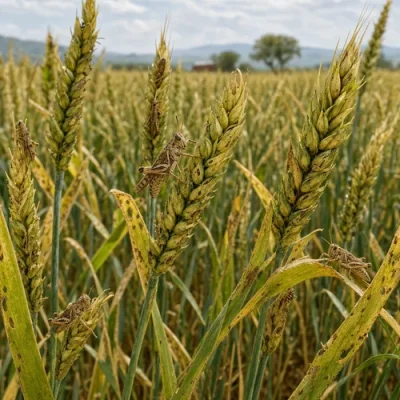
Locust Hatchings Put Crop Risk and Policy Wording in Focus?w=400

The information on this website is general in nature and does not take into account your objectives, financial situation, or needs. Consider seeking personal advice from a licensed adviser before acting on any information.

Fresh reports of Australian plague locust activity in north-west Victoria have added a practical risk-management issue to an already important harvest period.
ABC Rural reported on 17 October 2026 that farmers in parts of the Mallee were concerned about growing locust numbers and the cost of control, while Agriculture Victoria’s October updates show hatchings across listed Mallee locations and surveillance extending into the Wimmera.

The development matters because locust risk rarely fits neatly into one farm decision. It can affect standing crops, pasture, fodder, horticulture, spray programs, labour availability and contractor timing. It can also create uncertainty around who pays for prevention, response and damage after the event. Agriculture Victoria has described the current approach as a shared-responsibility model, with land managers expected to monitor and control their own properties while government agencies provide surveillance, forecasting and advice.

For farm operators, the insurance lesson is not simply whether locust damage is “covered”. Policy responses can vary significantly depending on the type of policy, the insured event, exclusions, notification requirements, evidence of loss and whether the cost relates to prevention, mitigation or actual physical damage. Many farmers will be familiar with crop insurance that responds to named perils such as fire, hail or storm, but pest damage, disease, yield reduction and chemical treatment costs may be treated differently unless the wording specifically provides for them.

The immediate priority is operational: finding hatchings early, acting while locusts are still in a controllable stage, keeping spray records and documenting crop condition before and after any event. From an insurance perspective, those same records can also be useful if a loss is later discussed with an insurer, adviser or broker. Photos, paddock maps, contractor invoices, chemical records, yield evidence and reports made to authorities may help establish timing and scale, even where a policy ultimately does not respond.

Several practical review points stand out for producers in affected or nearby districts:

  • Check whether crop, pasture, hay, grain and stored produce are insured under separate sections or different policies.
  • Review pest, vermin, disease and gradual-damage exclusions before assuming a loss pathway exists.
  • Confirm whether prevention or control costs are treated differently from damage to insured property.
  • Keep clear records of monitoring, spraying, contractor use, reported sightings and yield impacts.
  • Consider whether sums insured still reflect current replacement values for inputs, stored fodder, infrastructure and machinery used in response work.

The current situation is not being described by Agriculture Victoria as a predicted plague, and local conditions may differ sharply between properties. Even so, the hatchings are a timely reminder that farm insurance reviews should account for less dramatic but highly disruptive risks. Pest outbreaks can sit in the grey area between biosecurity management, agronomy, government response and insurance wording, making preparation and documentation just as important as the policy schedule itself.

Published:Thursday, 29th Oct 2026
Author: Paige Estritori

Please Note: We do not endorse any specific products or companies. Some content is sourced from third parties, including press releases, and may not be independently verified for accuracy or completeness.

Share this news item:

Rate this article

0 Comments

No comments yet. Be the first to share your thoughts.

Insurance News

Dingo Protection Debate Puts Livestock Risk Planning in Focus
05 Nov 2026: Paige Estritori
A federal assessment of whether the Wilkerr dingo population should receive national threatened-species protection has created a practical risk-management issue for livestock producers near the South Australian and Victorian border. ABC Rural reported on 3 November 2026 that some farmers around the Ngarkat and Big Desert region fear tighter protection could limit their ability to respond to attacks on sheep and cattle, while conservation advocates argue the small, isolated population needs stronger safeguards. - read more
Locust Hatchings Put Crop Risk and Policy Wording in Focus
29 Oct 2026: Paige Estritori
Fresh reports of Australian plague locust activity in north-west Victoria have added a practical risk-management issue to an already important harvest period. ABC Rural reported on 17 October 2026 that farmers in parts of the Mallee were concerned about growing locust numbers and the cost of control, while Agriculture Victoria’s October updates show hatchings across listed Mallee locations and surveillance extending into the Wimmera. - read more
Rural Crime Concerns Put Farm Assets Back in the Spotlight
16 Sep 2026: Paige Estritori
Fresh regional reporting on rural crime has brought a familiar farm risk back into view: the loss of machinery, fuel, tools, livestock and stored inputs through theft or unauthorised access. While weather and biosecurity often dominate farm risk discussions, crime can be just as disruptive when it stops work, delays contractors or leaves a producer without essential equipment at a critical point in the season. - read more
Fire Ant Concerns Add Another Layer to Farm Risk Planning
09 Sep 2026: Paige Estritori
Renewed rural attention on red imported fire ants is a timely reminder that biosecurity risk is not limited to livestock disease or crop pathogens. For Australian farm businesses, an invasive pest can create a chain of practical problems: movement restrictions, extra compliance work, damaged ground, animal welfare concerns, worker safety issues and possible disruption to harvest, transport or sales. - read more


Farm Insurance Articles

Crop Insurance in Australia: Cover Types, Risks and Policy Terms
Crop insurance can help Australian farmers manage financial loss from insured crop damage, but cover varies widely by crop, region, insurer and policy wording. This guide explains common cover types, insured events, exclusions, claims issues and policy terms to review before choosing farm crop insurance. - read more
Farm Equipment Insurance in Australia: Types of Cover, Costs and Claims
Farm equipment insurance helps Australian farmers manage the financial impact of damage, theft, breakdowns and liability risks involving machinery. Because tractors, harvesters, vehicles and other equipment can be costly to repair or replace, understanding the main policy types, exclusions and claims process can make it easier to choose cover that reflects your farm's equipment, location and risk profile. - read more
Livestock Insurance in Australia: Cover, Exclusions and Claims Considerations
Livestock insurance can help Australian farmers manage financial risk when cattle, sheep or other farm animals are lost, stolen, injured or affected by insured events. Policy wording varies, so it is important to understand what may be covered, what is commonly excluded and what evidence may be needed if you make a claim. - read more
Protecting Your Farming Business with Keyperson Insurance
Farming is not just an occupation; it's the backbone of Australia's economy and a vital part of our national identity. From the vast wheat belts of Western Australia to the fertile valleys of Victoria, our farmers work tirelessly to feed not just our nation, but countries all over the world. Their commitment ensures food security and supports rural communities, making farming a crucial industry for Australia's prosperity. - read more

Knowledgebase
Actuary:
A professional who analyzes the financial costs of risk and uncertainty using mathematics, statistics, and financial theory.