The information on this website is general in nature and does not take into account your objectives, financial situation, or needs. Consider seeking personal advice from a licensed adviser before acting on any information.
Crop insurance can help Australian farmers manage financial loss from insured crop damage, but cover varies widely by crop, region, insurer and policy wording. This guide explains common cover types, insured events, exclusions, claims issues and policy terms to review before choosing farm crop insurance.
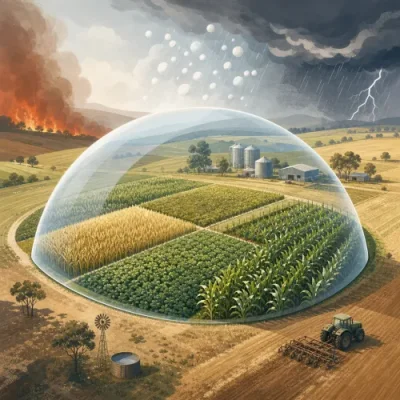
Crop insurance in Australia is designed to help farmers manage the financial impact of crop-related losses caused by insured events. For grain, horticulture and mixed-farming operators, crop losses can affect cash flow, input recovery, forward contracts, seasonal planning and the wider farming business.
However, farm crop insurance is not a single standard product. Policies differ by crop type, location, insurer, season, selected events, excesses, limits and underwriting criteria. Some policies cover only specified events such as hail or fire, while broader options may be limited, highly conditional or unavailable for some farms. This article explains how crop insurance generally works, what risks may be covered, and the conditions and exclusions Australian farmers should review carefully.
What crop insurance is designed to cover
Crop insurance is a form of agricultural insurance that may provide financial protection when an insured crop is damaged or lost because of a covered event. It can apply to standing crops, harvested crops, or crop-related income exposure depending on the policy wording.
For many farms, crop cover is considered alongside broader farm insurance cover, including rural property, machinery, liability, livestock and business interruption arrangements. Crop cover is usually tailored because no two farms have the same mix of crop varieties, paddock locations, seasonal risks, irrigation arrangements or exposure to weather events.
The purpose of crop damage insurance is not to remove farming risk altogether. Instead, it may help transfer selected risks to an insurer where those risks are accepted under the policy. The farmer remains responsible for understanding what is insured, what is excluded, and what evidence may be required if a claim is made.
Common types of crop insurance in Australia
The crop insurance market can vary by season and insurer appetite. Availability, premiums, excesses and policy terms depend on the farm's circumstances and the provider's criteria. Common cover structures include the following.
Named perils crop insurance
Named perils cover protects against specific events listed in the policy. If the event is not named, it is generally not covered. For example, a policy might cover hail, fire or certain storm-related damage but exclude other causes of crop loss.
This type of cover is common because it clearly defines the insured events. Farmers should check whether the policy applies to the particular crop, paddock, growth stage and geographic area relevant to their operation.
Hail, fire and storm crop cover
Hail fire storm crop cover is often discussed because these events can cause sudden and visible crop damage. The exact scope can differ. Some policies may separate hail and fire, while others may include defined storm events or additional extensions.
Key points to check include how the insurer defines hail, storm, fire, lightning or impact damage; whether cover begins immediately or after acceptance; and whether certain events are subject to higher excesses, sub-limits or special conditions.
Multi-peril or broader crop cover
Broader crop insurance may aim to cover a wider range of causes, such as multiple weather-related perils or yield shortfall. In Australia, these options may be more limited, more complex and subject to stricter underwriting than named perils cover.
Farmers considering broader protection should read the policy wording closely. Important questions include whether the policy covers production loss, revenue loss or only physical crop damage; how expected yield is calculated; what data is required; and which causes remain excluded.
Parametric or index-based arrangements
Some agricultural risk products use an agreed index or trigger, such as a measured weather event, rather than a traditional loss assessment. These arrangements are not the same as conventional crop damage insurance. Payment may depend on whether the trigger is met, even if the farm's actual loss is higher or lower.
Because these products can be technical, farmers should consider seeking professional guidance before relying on them as part of their risk management strategy.
Storage and transit considerations
Crop insurance for a standing crop may not automatically cover harvested grain, produce in storage, or produce being transported. Those risks may sit under separate property, goods in transit, deterioration, machinery breakdown or business insurance sections.
If your operation stores grain on farm, packs horticultural produce, uses contractors, or transports crops to receival sites, check where cover starts and ends.
What risks may be covered?
The insured events depend on the policy. A crop insurance policy may include one or more of the following, subject to conditions:
- Hail: physical damage to crops from hail impact.
- Fire: crop loss caused by fire, including bushfire where covered by the wording.
- Lightning: damage caused directly by lightning, where specified.
- Storm or wind: damage from defined storm or wind events, if included.
- Flood or inundation: only where the policy specifically includes and defines this cover.
- Frost: sometimes available only under particular policy structures or for certain crops.
- Malicious damage or impact: where included and subject to evidence requirements.
It is important not to assume that a familiar word has its everyday meaning. Insurance definitions can be narrower than a farmer might expect. For example, a policy may distinguish between storm, flood, rain damage, waterlogging and surface runoff.
Risks commonly limited or excluded
Crop insurance exclusions are just as important as the insured events. Common limitations and exclusions may include:
- Drought or lack of rainfall: often excluded under basic named perils policies unless specific broader cover applies.
- Pest, disease or weed pressure: commonly excluded or heavily limited.
- Poor germination, planting failure or crop establishment issues: may be excluded unless specifically covered.
- Farming practice, input or management issues: such as unsuitable sowing, inadequate spraying, poor fertiliser application or failure to follow reasonable agronomic practice.
- Market price movements: crop insurance generally does not protect against commodity price changes unless a specific revenue or price mechanism is included.
- Quality downgrades: may be excluded or covered only in limited circumstances.
- Gradual deterioration: including slow spoilage, rot, mould or deterioration not caused by an insured event.
- Pre-existing damage: damage that occurred before cover was accepted or before the insured period began.
- Uninsured paddocks or undeclared crops: crops not properly listed, declared or accepted may not be covered.
- War, nuclear risks, unlawful acts and deliberate damage by the insured: standard exclusions across many insurance products.
Exclusions can vary significantly. Farmers should ask for the product disclosure statement and policy schedule, then compare them with the risks most likely to affect their region and crop type.
Key policy terms farmers should understand
Crop policies can contain technical terms that directly affect claim outcomes. Before arranging cover, it is worth reviewing the following items.
| Policy term | Why it matters |
|---|
| Insured crop and location | The policy may only cover listed crops, paddocks, farms or geographic areas. |
| Sum insured or insured value | This affects the maximum amount payable and may need to reflect expected crop value, input costs or another agreed basis. |
| Basis of settlement | The policy should explain how the insurer calculates loss, including yield, quality, salvage and market value assumptions. |
| Excess | The farmer may need to contribute a fixed amount, percentage or event-based excess before a claim is paid. |
| Sub-limits | Some events, crops or expenses may have lower limits than the main policy amount. |
| Waiting periods or cover start date | Losses before acceptance, before attachment, or during a waiting period may not be covered. |
| Underinsurance or average clause | If the crop is insured for less than its required value, the claim payment may be reduced. |
| Notification requirements | Late claim notification can create assessment difficulties and may affect the claim. |
How insurers may assess crop insurance applications
When considering farm crop insurance, insurers may ask for information about the farm, crop and risk profile. The exact requirements vary, but they may include:
- crop type, variety and intended use;
- paddock locations and hectares planted;
- sowing and expected harvest dates;
- irrigation or dryland status;
- historical yields and production records;
- previous losses or claims;
- firebreaks, access, storage and risk controls;
- use of contractors, share-farming or leased land arrangements;
- existing risk management practices, including monitoring and emergency planning.
Insurers may accept, decline, limit or price cover differently based on this information. A broker or adviser who understands agricultural insurance may help interpret policy wording and gather the information insurers require, but outcomes still depend on the provider's criteria and the farm's circumstances. Farmers who want help comparing wording can review the available farm insurance broker options on the site.
Crop insurance for grain, horticulture and mixed farms
Different farming systems can create different insurance questions.
Grain and broadacre crops
Grain growers may focus on hail, fire and storm exposure across large paddock areas. Key issues include crop declarations, paddock maps, yield estimates, harvest timing, fire management and whether stored grain is covered separately after harvest.
Horticulture
Horticultural operations may face more complex questions around high-value crops, crop stage, quality, packing, cool storage, irrigation, frost, hail netting, disease and perishability. A policy that works for broadacre cereals may not suit fruit, vegetables, nuts or vines.
Mixed farms
Mixed farms may need crop cover to work alongside livestock, machinery, liability and property insurance. For example, a fire event might affect standing crop, fencing, sheds, machinery and feed reserves. Each loss may fall under a different policy section with different excesses and limits.
How crop claims generally work
If crop damage occurs, the claims process usually starts with prompt notification to the insurer or broker. Farmers should avoid assuming that a claim will be straightforward simply because damage is visible.
Useful steps may include:
- Notify the insurer or broker promptly. Provide the date, time, location and suspected cause of damage.
- Preserve evidence. Take photographs, keep paddock records, retain weather information where available and document the affected area.
- Do not destroy or harvest damaged crop without guidance. The insurer may need to inspect the crop or approve steps to minimise further loss.
- Keep production and input records. Sowing records, chemical and fertiliser records, yield maps, invoices and delivery dockets may assist assessment.
- Cooperate with the loss assessor. The assessor may inspect paddocks, review records and estimate the extent of insured damage.
- Check the settlement calculation. Review how the insurer has applied excesses, limits, salvage value, yield assumptions and policy terms.
Claim outcomes depend on the policy wording, the insured event, the available evidence and the insurer's assessment. If a farmer disagrees with a claim decision, the policy documents should explain the insurer's internal dispute process and any external dispute resolution options that may apply.
Questions to ask before buying crop insurance
Before choosing crop insurance in Australia, farmers may wish to ask:
- Which crops, paddocks and growth stages are covered?
- Which events are insured, and how are they defined?
- Are drought, frost, flood, pest, disease or quality losses covered, limited or excluded?
- When does cover start and end?
- How is the insured value calculated?
- What excess applies to each event?
- Are there sub-limits for particular crops, events or expenses?
- What records are required at application and claim time?
- Does the policy cover harvested crop, storage or transit?
- What happens if only part of a paddock is damaged?
- Could underinsurance or an average clause reduce a claim?
- What risk controls does the insurer expect the farm to maintain?
These questions can help compare policies beyond premium alone. A lower premium may reflect narrower cover, higher excesses or stricter exclusions.
Where crop insurance fits in farm risk management
Insurance is only one part of managing crop risk. Agronomy, diversification, fire preparation, water planning, machinery maintenance, storage management and financial planning all contribute to resilience.
For severe weather and emergency planning, crop insurance should be reviewed alongside practical preparedness measures. The article on preparing your farm for natural disasters explains broader steps such as risk assessments, emergency planning and protecting farm infrastructure.
Crop insurance works best when policy settings reflect the actual farm operation. Review cover when crop mix, land use, leases, storage arrangements, machinery, contractors or production values change. Keep records current and confirm material changes with the insurer or broker rather than assuming existing cover will automatically respond.
Key takeaways
- Crop insurance in Australia varies by insurer, crop, region and selected insured events.
- Named perils cover, such as hail and fire, is different from broader multi-peril or index-based arrangements.
- Exclusions for drought, pests, disease, market prices and management-related losses are common and should be checked carefully.
- Policy terms such as sums insured, excesses, sub-limits, cover start dates and settlement basis can materially affect claim outcomes.
- Accurate declarations and strong farm records can make application and claim assessment easier.
- Crop cover should be considered as part of broader farm insurance and practical risk management, not as a substitute for on-farm preparation.
Published: Monday, 12th Oct 2026
Author: Paige Estritori



No comments yet. Be the first to share your thoughts.