The information on this website is general in nature and does not take into account your objectives, financial situation, or needs. Consider seeking personal advice from a licensed adviser before acting on any information.
Farm liability insurance can help Australian farm owners and operators manage claims involving injury, property damage or other third-party losses connected with farming activities. This guide explains common liability risks and how this type of cover may fit within a broader farm insurance policy.
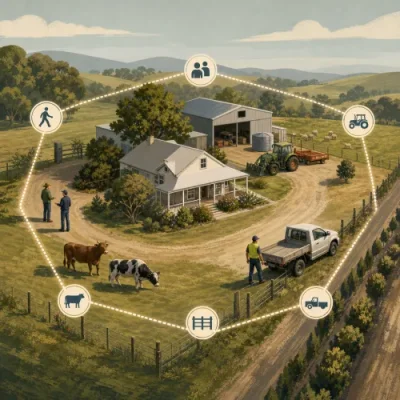
Farm liability insurance is designed to help protect a farming business from certain claims made by other people or businesses. On a working property, liability risks can arise from visitors, contractors, livestock, machinery, produce, chemicals, neighbouring land and public roads. A single farm may operate as a workplace, home, business, storage site, transport hub and visitor destination, which can make liability exposures more complex than they first appear.
This article explains common liability risks on Australian farms, how public liability farm insurance and related covers may work, and what to consider when reviewing farm insurance coverage. It is general information only and does not take into account your farm's specific operations, location, assets, contracts or risk profile.
What is farm liability insurance?
Farm liability insurance generally refers to cover for certain legal liabilities arising from farming activities. Depending on the insurer and policy wording, this may include claims where a third party alleges they suffered personal injury, property damage or another covered loss because of the farm's operations.
Liability cover is often included as part of a broader farm insurance package rather than purchased in isolation. A broader policy may also include property, machinery, livestock, crop, business interruption or other sections. For an overview of broader policy options, you can review farm insurance cover and then compare that with the specific liability risks described below.
It is important to distinguish farm liability insurance from other types of insurance. For example, it is not the same as workers compensation, which is governed by state and territory arrangements, and it may not replace motor vehicle compulsory third party requirements or specialised professional, environmental, marine or aviation cover. The exact scope depends on the insurer, policy wording, exclusions, endorsements and your declared activities.
Why liability risks can be significant on farms
Farms often involve a mix of people, animals, vehicles, machinery, chemicals, buildings, water infrastructure and natural hazards. Even well-run properties can face incidents that affect others. Liability claims may involve compensation demands, legal defence costs, investigation time and disruption to the farming business.
Common factors that can increase liability exposure include:
- regular use of contractors, seasonal workers, transport operators or service providers;
- visitors entering the property, including customers, tourists, school groups, consultants, stock agents or neighbours;
- livestock that may escape, stray, injure people or damage other property;
- machinery operating near roads, public access points or neighbouring land;
- spraying, chemical storage, fuel storage, effluent systems or waste handling;
- selling produce, livestock, hay, seed, eggs, meat, milk, fibre or other farm products;
- agistment, farm stays, roadside stalls, pick-your-own operations or on-farm events;
- shared boundaries, easements, tracks, irrigation channels or water runoff issues.
Not every risk will be covered automatically. Insurers usually expect accurate disclosure of farm activities and may treat higher-risk activities differently.
Common farm liability risks in Australia
Visitors, customers and members of the public
Public liability farm insurance may be relevant where people who are not employees enter the property. This can include delivery drivers, contractors, agents, vets, consultants, customers, family guests, tourists, school groups or members of the public attending an event.
Potential incidents might involve slips, trips, falls, animal interactions, unsafe structures, unfenced hazards, vehicle movements or injury near sheds, yards, dams or workshops. A farm with no public-facing operation can still have visitor exposure if third parties regularly enter the property for business purposes.
Contractors and service providers
Farms commonly rely on shearers, harvest contractors, fencing contractors, machinery technicians, agronomists, transport operators, vets, electricians and other specialists. Liability issues can arise if a contractor is injured, damages property, causes damage to another party, or alleges the farm contributed to the incident.
Contracts may also allocate responsibility for insurance, indemnities and safe work obligations. Before engaging contractors, farm operators may wish to check whether the contractor has their own insurance, whether the work is within the farm's declared business activities, and whether any contractual terms create obligations that are not covered by the policy.
Livestock escape, injury or property damage
Livestock can create liability risks if animals stray onto roads, neighbouring properties or public areas, or if they injure people or damage fencing, crops, gardens, vehicles or infrastructure. Risk can be affected by fencing, gates, signage, handling practices, stocking density, weather events and the behaviour of particular animals.
Liability cover may respond differently depending on the circumstances, the species involved, the location of the incident and any policy exclusions. Farms with agistment arrangements should also check whether animals owned by others are treated differently from livestock owned by the insured business.
Farm machinery and vehicle-related incidents
Tractors, harvesters, quad bikes, utes, trucks, trailers, forklifts and other machinery can create liability risks, particularly around shared tracks, yards, loading areas, public roads and contractor work zones. Some incidents may fall under farm liability cover, while others may require motor, plant, machinery or compulsory third party cover.
Because machinery-related incidents can involve overlapping policy sections, it is useful to understand how your equipment policy and liability section interact. For machinery-specific issues, see Farm Equipment Insurance in Australia: Types of Cover, Costs and Claims.
Damage to neighbouring property
Farming activities can affect neighbours through stock movement, fire spread, falling trees, fencing disputes, water runoff, spray drift, dust, noise, odour, escaped dogs, machinery movement or accidental damage to shared infrastructure. Some events may be insurable, while others may involve exclusions, gradual damage issues, environmental limitations or disputes outside the policy scope.
Good records, maintenance logs, chemical application notes, maps, contractor instructions and correspondence can help clarify what happened if a dispute arises.
Product liability and produce sold from the farm
Product liability may be relevant where a farm sells or supplies produce, livestock, feed, hay, seed, eggs, honey, meat, dairy, fibre or other goods. Claims could allege contamination, illness, injury, incorrect labelling, defective packaging or damage caused by a supplied product.
Not all farm public liability policies automatically include the same product liability terms. Farms that process, package, store, transport, export or sell directly to consumers may have different exposures from farms that only sell through traditional supply chains. Any value-adding activities, roadside stalls, farmers market sales or online sales should be disclosed to the insurer or broker.
Chemicals, pollution and environmental incidents
Spraying, fertiliser use, fuel storage, chemical storage, waste disposal, effluent management and water runoff can create liability risks. Some policies may include limited cover for sudden and accidental pollution events, but exclude gradual pollution, known contamination or certain environmental liabilities.
Because pollution and environmental claims can be complex, farm operators should read the wording carefully and ask how the policy treats chemical drift, fuel leaks, contamination, runoff, clean-up costs and regulatory action. Specialist cover may be needed for some exposures.
On-farm tourism, events and non-traditional activities
Some farms operate farm stays, cellar doors, wedding venues, trail rides, open days, school visits, agritourism experiences, workshops, camping areas, produce tastings or pick-your-own operations. These activities may materially change the liability profile because they involve members of the public spending more time on the property.
Insurers may need to know the number of visitors, frequency of events, facilities provided, food or alcohol service, water activities, animal interactions, accommodation, safety procedures and whether any third parties run activities on-site. Assuming these activities are automatically covered can create gaps.
How farm liability insurance fits into a broader farm policy
Liability insurance is only one part of agricultural insurance. It usually sits beside other policy sections that respond to different types of loss. Understanding the difference can help avoid relying on the wrong section of cover.
| Policy area |
Typical focus |
Key consideration |
| Farm liability insurance |
Claims by third parties alleging injury, property damage or covered loss connected with farm activities |
Check who is covered, what activities are declared, limits, exclusions and legal defence terms |
| Farm property insurance |
Buildings, sheds, contents, fencing and other insured property |
Review insured values, listed assets, perils covered and natural disaster terms |
| Farm machinery insurance |
Tractors, harvesters, tools, plant and equipment |
Check accidental damage, theft, breakdown, road use and liability interactions |
| Livestock or crop cover |
Specified livestock, crops or production risks |
Cover varies widely by policy type, cause of loss, location and management practices |
| Business interruption or income protection-style cover |
Financial disruption following an insured event |
Often depends on a covered property event and the wording of the policy |
A farm insurance package should be reviewed as a whole. A liability section may help with a third-party claim, but it will not necessarily repair your own machinery, rebuild a shed, compensate for lost production, or cover regulatory penalties unless the policy expressly provides for that outcome.
Important policy terms to check
When comparing farm liability insurance policies, the details matter. Similar-looking policies may handle activities, exclusions and claim costs differently.
- Business description: Make sure the insured farming activities accurately reflect what the farm actually does, including any contracting, tourism, processing, retail or agistment activities.
- Who is insured: Check whether the policy covers the farm entity, owners, directors, partners, employees, volunteers, family members or related entities where relevant.
- Limit of liability: This is the maximum amount the insurer may pay for covered claims, subject to the policy terms. Consider whether the limit reflects the scale and nature of the farm's exposures.
- Excess: Review how much the farm may need to contribute to a claim and whether different excesses apply to different claim types.
- Legal defence costs: Check whether defence costs are included within the limit of liability or in addition to it, and whether the insurer must approve legal costs before they are incurred.
- Products liability: Confirm whether product liability is included and whether it applies to the specific produce or goods you sell.
- Pollution and chemical exclusions: Review whether cover applies only to sudden and accidental incidents or whether broader environmental liability is excluded.
- Contractual liability: Some policies limit cover for liabilities assumed under contract beyond what would otherwise apply at law.
- Geographic limits: Check whether cover applies only within Australia or whether any interstate, export or off-farm activities are treated differently.
- Claims notification: Understand when and how to notify the insurer of incidents, demands, complaints, letters of demand or potential claims.
Examples of questions to ask before choosing cover
Because farms vary widely, the right questions can be more useful than looking for a one-size-fits-all policy. When speaking with an insurer or broker, consider asking:
- Are all of our farming activities, side businesses and seasonal activities listed or accepted under the policy?
- Does the policy include public liability and products liability, and what limits apply?
- How does the policy treat contractors, volunteers, family members and visitors?
- Are livestock escape incidents, agistment, animal handling and stock movements covered?
- What happens if farm machinery is involved in an incident on a public road or neighbouring property?
- How are chemical drift, fuel leaks, pollution or contamination incidents handled?
- Are on-farm events, farm stays, roadside stalls or direct-to-consumer sales covered?
- What exclusions are most likely to affect our farm?
- What records would support a claim?
- When should we notify the insurer about an incident or potential claim?
If your operation has unusual exposures, a broker familiar with agricultural liability insurance may be able to help you discuss policy options and disclosure requirements. You can use the brokers page as a starting point for finding support, noting that availability, pricing and policy terms depend on provider criteria and your circumstances.
Risk management still matters
Insurance is not a substitute for safe systems, property maintenance or good farm governance. Insurers may consider risk controls when assessing applications, setting terms or reviewing claims. Practical steps may include:
- maintaining fences, gates, grids, yards, walkways, sheds and visitor areas;
- using clear procedures for contractors, deliveries and site inductions;
- keeping chemical storage, application and safety records;
- recording machinery maintenance and operator instructions;
- managing traffic flow around sheds, loading zones and public access points;
- checking signage and restricted areas where visitors may be present;
- documenting livestock movement, agistment arrangements and animal handling procedures;
- reviewing contracts before accepting indemnity or insurance obligations;
- reporting incidents promptly and keeping photos, notes and correspondence.
Risk controls can also help reduce the likelihood of injury or damage occurring in the first place. However, they do not guarantee that a claim will be avoided or that an insurer will accept a claim.
When to review farm liability insurance
Liability cover should be reviewed whenever the farm changes, not only at annual renewal. Consider reviewing your policy if you:
- start selling produce directly to the public;
- add farm stays, events, tours, workshops or school visits;
- take on agistment or livestock owned by others;
- increase contractor use or begin contracting services to other farms;
- buy new machinery or change how equipment is used on roads;
- store larger quantities of fuel, fertiliser or chemicals;
- lease extra land or change business structures;
- enter supply contracts with insurance or indemnity requirements;
- expand into processing, packaging, export or branded products.
Providing accurate and timely information to the insurer is important. If a material activity is not disclosed, or if the policy excludes the activity, cover may be limited or unavailable.
Key takeaways
Farm liability insurance can be an important part of farm risk insurance, especially for properties that interact with visitors, contractors, neighbours, customers, suppliers and the broader public. It may help with certain third-party injury, property damage or product-related claims, but it does not cover every business risk.
The most useful starting point is to map how people, animals, vehicles, products, chemicals and neighbouring properties interact with your farming operation. From there, you can compare policy wording, check exclusions and discuss any unusual activities before a claim occurs. Policy availability, limits, premiums and claim outcomes depend on the insurer's criteria, the policy terms and the circumstances of the farm and incident.
Published: Monday, 12th Oct 2026
Author: Paige Estritori



No comments yet. Be the first to share your thoughts.