The information on this website is general in nature and does not take into account your objectives, financial situation, or needs. Consider seeking personal advice from a licensed adviser before acting on any information.
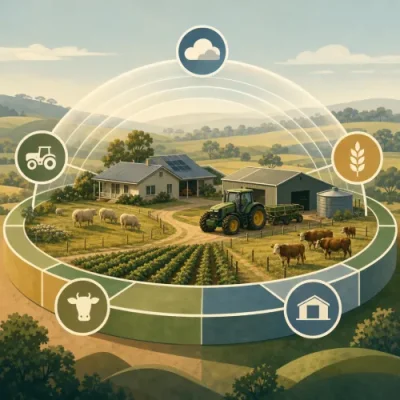
Farm insurance in Australia is usually built from several policy sections that protect different parts of a farming operation, such as property, machinery, livestock, crops and liability. Understanding how these sections work together can help farm owners and operators ask better questions when comparing policies or speaking with a broker.
Farm insurance in Australia is not usually a single, standard product that covers every risk on a rural property. It is commonly structured as a package of policy sections, with each section designed to protect a different part of the farming business.
For example, one farm insurance policy may include cover for farm buildings, machinery, livestock, public liability and business interruption. Another may focus mainly on rural property insurance and farm liability insurance, with separate arrangements for crops, vehicles or specialist equipment.
This guide explains what farm insurance cover can include, how different policy sections commonly work together, and what Australian farm owners and operators should check before requesting quotes or reviewing existing cover. It is general information only and does not take into account your farm, budget, risk profile or insurance needs.
What is farm insurance?
Farm insurance is a type of agricultural insurance designed for the assets, activities and liabilities involved in running a farm or rural business. It may cover physical property, income-related risks, legal liability exposures and specific agricultural assets such as livestock, crops, fencing, tanks, pumps and machinery.
Unlike many standard home or business insurance policies, farm insurance often needs to account for mixed uses. A farm may include a family home, sheds, workshops, storage areas, grazing land, cropping paddocks, irrigation systems, contractors, employees, vehicles and visitors. This is why farm insurance policies are often modular: the farmer selects or discusses the relevant sections rather than assuming every farm risk is automatically included.
If you are still at the early research stage, the Farm Cover Insurance homepage provides a starting point for understanding general farm insurance cover options in Australia.
What can farm insurance cover in Australia?
The exact cover available depends on the insurer, policy wording, farm activities, location, underwriting criteria and the options selected. However, many farm insurance policies are built around the following cover areas.
Farm buildings and property
Farm property cover can protect physical structures and fixed assets on the farm. Depending on the policy, this may include:
- Farm sheds, barns, workshops and storage buildings
- Stables, dairies, shearing sheds or packing facilities
- Fencing, gates, yards and stock handling facilities
- Tanks, pumps, silos and other fixed infrastructure
- The homestead or farmhouse, if included in the policy
Some policies treat domestic buildings, commercial farm buildings and infrastructure separately. It is important to check whether the policy covers replacement, reinstatement, repair, indemnity value or another basis of settlement. The basis of settlement can significantly affect how a claim is assessed.
Farm contents and stored goods
Farm contents cover may apply to tools, spare parts, supplies, chemicals, fertiliser, seed, animal feed and other items stored on the property. Policies can vary in how they define farm contents compared with household contents, stock in trade or business inventory.
Farmers should check whether stored goods are covered in sheds, in the open, in transit or at temporary locations. Some items may have sub-limits, security requirements or exclusions for deterioration, contamination or gradual damage.
Farm machinery and equipment
Machinery is often one of the largest asset classes on a farm. Farm machinery insurance may cover tractors, harvesters, sprayers, balers, loaders, quad bikes, side-by-side vehicles, irrigation equipment and other plant used in farm operations.
Cover may be arranged for accidental damage, fire, theft, specified events, breakdown or liability arising from machinery use, depending on the policy. Some machinery may need to be listed individually, while smaller items may be covered under a general equipment section.
Because machinery cover can have its own limits, exclusions and claims requirements, it may be useful to read a more focused explanation of farm equipment insurance in Australia if machinery is a major exposure for your operation.
Livestock insurance
Livestock insurance may cover animals such as cattle, sheep, goats, pigs, horses, poultry or other farm animals, depending on the insurer and policy. Cover can vary widely. Some policies may insure livestock against specified events such as fire, lightning, storm, theft or accidental death, while more specialised policies may address particular animal classes or commercial risks.
Important questions include how the policy defines insured livestock, whether animals need to be listed, whether cover applies in transit or at agistment, and how value is assessed after a loss. Disease, biosecurity events, breeding risks and mortality causes are areas where policy wording can be especially important.
Crop insurance
Crop insurance can help manage certain risks affecting growing crops, harvested produce or stored commodities. The types of cover available depend on the crop, region, insurer and season. Policies may relate to events such as fire, hail, storm, transit loss or other specified perils, but not every weather or production risk is automatically covered.
Crop insurance is often more specialised than general rural property insurance. Farmers should check what crop stages are covered, how losses are measured, whether there are notification requirements, and whether the policy covers only named events. Drought, poor yield, disease, pests or market price changes may be excluded unless a specific product addresses them.
Farm liability insurance
Farm liability insurance is designed to respond to certain legal liability claims made against the farm business. This may include claims involving personal injury or property damage connected with farm activities.
Examples of liability exposures can include visitors entering the property, contractors working on site, livestock escaping and causing damage, farm machinery operating near public roads, or produce-related incidents. The scope of liability cover depends on the policy wording, business activities declared and exclusions.
Farm liability insurance should not be assumed to cover every legal risk. Professional advice, employment disputes, pollution, product recalls, vehicle accidents and contractual liability may be treated differently or excluded unless specifically covered.
Business interruption and loss of income
Business interruption cover may help with financial losses if an insured event disrupts farm operations. For example, if a fire damages a key shed or processing area, business interruption cover may help with lost income, additional operating costs or temporary arrangements, subject to the policy.
This section is usually linked to an insured event under another section of the policy. In other words, business interruption may not respond unless the disruption is caused by damage or loss that the policy covers. The indemnity period, gross income calculation, waiting periods and records required can all affect the outcome of a claim.
Motor vehicles, trailers and mobile plant
Farm vehicles may need separate motor insurance, even if they are used mainly on the property. Utes, trucks, trailers, motorbikes, quad bikes, side-by-side vehicles and registered machinery may be treated differently depending on how and where they are used.
Farmers should check whether vehicles are covered on public roads, on private land, in transit, while being operated by employees or family members, or when used for contracting work. Registration status and vehicle use can affect the type of cover required.
Personal accident, workers and key people
Some farm insurance arrangements may include or sit alongside covers for personal accident, illness, workers compensation obligations or key people in the business. These are not the same as insuring farm property, but they can form part of a broader risk management plan.
Because requirements and suitable cover can vary depending on business structure, employees, contractors and state or territory obligations, farmers should seek qualified guidance before relying on any one policy section for people-related risks.
How farm insurance policy sections work together
A farm insurance policy often works as a coordinated set of covers rather than one blanket promise. Each section has its own insured items, events, limits, exclusions and claims conditions.
Consider a simple example. A severe storm damages a machinery shed, destroys stored tools and interrupts the farm's ability to operate for several weeks. Different parts of the same policy might respond in different ways:
| Loss or issue | Possible policy section | What to check |
|---|
| Damage to the shed | Farm buildings or rural property insurance | Whether the shed is listed, the sum insured and settlement basis |
| Tools and spare parts damaged inside | Farm contents or general property | Item limits, storage conditions and proof of ownership |
| Damage to machinery | Farm machinery insurance | Whether the machinery is listed, covered for storm and insured for the right value |
| Lost income or extra operating costs | Business interruption | Whether the storm damage is an insured event and how income loss is calculated |
| Injury to a visitor during clean-up | Farm liability insurance | Whether the circumstances fall within liability cover and exclusions |
This is why it is important to review the policy as a whole. A gap in one section may affect another. For instance, business interruption cover may be less useful if the underlying property damage is not covered. Machinery cover may not help if the item was not declared or falls outside the policy definition. Liability cover may not apply if the activity involved was not disclosed to the insurer.
Common policy features to understand
When comparing farm insurance policies in Australia, it helps to understand the features that influence how cover operates.
Insured events
Policies may cover defined events such as fire, storm, theft, impact, malicious damage or accidental damage, depending on the section selected. Some policies are broader than others, but broader wording can still include exclusions and conditions.
Sum insured
The sum insured is the maximum amount the insurer will pay for a covered item or section, subject to policy terms. If the sum insured is too low, the farm may be underinsured. If it is too high, premiums may be higher than necessary, although the insurer will still assess claims under the policy wording.
Limits and sub-limits
A policy may have an overall limit and smaller sub-limits for certain items or costs. For example, there may be a specific limit for fencing, tools, hay, temporary repairs, debris removal or goods in transit.
Excesses
An excess is the amount the policyholder contributes towards a claim. Different sections or events may have different excesses. Higher excesses can affect premium pricing but may also increase out-of-pocket costs at claim time.
Exclusions
Exclusions describe what the policy does not cover. Common areas to check include wear and tear, gradual deterioration, faulty workmanship, poor maintenance, intentional acts, illegal activity, certain weather events, disease, pests, contamination, pollution and unexplained disappearance. The exact exclusions depend on the policy.
Disclosure and farm activities
Insurers assess farm risk based on the information provided. Farm type, location, buildings, machinery, livestock numbers, cropping activities, storage of chemicals or fuel, contracting work, visitor access and previous claims may all be relevant. If activities change, the insurer or broker may need to be told.
What farm insurance may not cover automatically
Farm owners should be careful not to assume that every farming risk is included. Depending on the policy, cover may be limited or unavailable for:
- Damage caused by gradual wear, rust, corrosion or lack of maintenance
- Uninsured buildings, machinery or livestock not listed where listing is required
- Drought, poor seasonal conditions or market price changes
- Certain disease, biosecurity, pest or contamination events
- Flood, bushfire, cyclone or storm surge where exclusions, waiting periods or special terms apply
- Contracting work or non-farming business activities not disclosed to the insurer
- Vehicles or machinery used outside the policy's permitted use
- Liability assumed under a contract beyond normal legal liability
- Losses where records, valuations or proof of ownership are insufficient
Natural hazards are particularly important in many parts of Australia. If bushfire, flood, cyclone, hail or storm risk is relevant to your region, it may also be worth reviewing practical steps for preparing your farm for natural disasters alongside your insurance arrangements.
How to think about farm insurance cover before seeking quotes
Before requesting farm insurance quotes, it can help to prepare a clear picture of what needs to be insured. This does not guarantee availability, pricing or acceptance, but it can make discussions more productive.
- List your major assets: Include buildings, fencing, machinery, vehicles, livestock, stored goods, irrigation systems and specialist equipment.
- Estimate replacement or reinstatement values: Consider whether values are current and whether rebuilding or replacement costs have changed.
- Identify key income risks: Think about what would happen if a shed, dairy, packing line, irrigation system or key machine could not be used.
- Map liability exposures: Consider visitors, workers, contractors, road access, livestock movement, produce sales and events on the property.
- Review seasonal and regional risks: Weather, fire, flood, remoteness, theft, transport distance and access to repair services can all matter.
- Check business structure: Ownership, leases, partnerships, trusts, employees and contractors can influence insurance requirements.
- Prepare records: Asset registers, photos, invoices, valuations, maintenance records and maps can support both underwriting and claims.
If you want help interpreting farm insurance policies or comparing options, the site's brokers page may be a useful next step. A broker can explain policy differences, although any recommendation should be assessed against your own circumstances and the relevant product documents.
Questions to ask when reviewing farm insurance policies
When speaking with an insurer or broker, practical questions can help uncover how the policy works:
- Which farm assets are specifically listed, and which are covered under blanket limits?
- Are the sums insured based on current replacement or reinstatement costs?
- What events are covered for buildings, machinery, livestock and crops?
- Are flood, bushfire, cyclone, hail or storm losses treated differently?
- Does machinery cover apply on and off the farm?
- Are livestock covered in transit, at saleyards, at agistment or only on the property?
- How does the policy define farm contents, stock, produce and stored goods?
- What liability activities are included, and what needs to be declared separately?
- Does business interruption cover depend on an insured property claim?
- What records are needed to support a claim?
- What exclusions, excesses and sub-limits are most likely to affect this farm?
The bottom line
Farm insurance in Australia can cover a wide range of farm assets and risks, but it is usually made up of separate sections that need to be selected, understood and kept up to date. Property, machinery, livestock, crop, liability and business interruption cover can complement each other, but each section has its own limits and conditions.
The right structure depends on the farm's assets, activities, location, income reliance, legal exposures and tolerance for risk. Reading the policy wording, checking exclusions and asking targeted questions before a loss occurs can reduce confusion at claim time.
This article provides general educational information only. It is not personal advice and should not be treated as a recommendation to buy, change or cancel any insurance product. Farm insurance availability, pricing, terms and claim outcomes depend on individual circumstances, insurer criteria and the relevant policy wording.
Published: Monday, 12th Oct 2026
Author: Paige Estritori



No comments yet. Be the first to share your thoughts.