

Farm Cover Insurance :: News
SHARE

Share this news item!

Seasonal Fire Risk Keeps Farm Insurance Planning Front of Mind

Why fuel loads, fencing and farm assets deserve attention before the next fire run

Seasonal Fire Risk Keeps Farm Insurance Planning Front of Mind?w=400

The information on this website is general in nature and does not take into account your objectives, financial situation, or needs. Consider seeking personal advice from a licensed adviser before acting on any information.

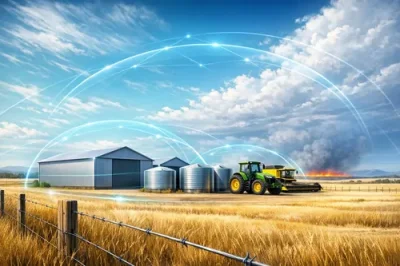
The latest seasonal fire outlook is a practical reminder that fire risk is not limited to the peak of summer.
Across parts of northern Australia, strong wet-season growth can leave heavy grass and roadside fuel loads behind once conditions dry out.
For mixed farms, cattle properties and broadacre operators, that creates a familiar but often underestimated exposure: a fast-moving grassfire that can damage assets well beyond the homestead.

For farm businesses, the insurance issue is broader than whether a dwelling is covered. Fences, sheds, workshops, pumps, tanks, hay, stored grain, machinery and livestock infrastructure may all sit in the fire path. Some items are obvious on a schedule; others are easily missed or insured for values that no longer reflect replacement costs. Inflation in building materials, freight, labour and fencing components can quickly turn an old sum insured into a shortfall after a major loss.

This is where pre-season planning matters. Farmers should check whether their policy distinguishes between buildings, contents, farm improvements, mobile plant, fencing and produce. They should also confirm whether hay and grain are covered in storage, in transit, or only at nominated locations. Where equipment is moved between blocks, contractors’ yards or lease country, location limits and unattended machinery conditions can become important.

Fire risk also raises liability questions. Controlled burns, machinery operations in dry paddocks, hot works, slashing, harvest activity and vehicles on stubble can all create ignition risks. Even where a farm is not directly damaged, a fire that starts on or moves through a property can lead to third-party claims involving neighbouring fences, pasture, livestock or structures. Farm liability insurance should be reviewed alongside property cover, not treated as a separate afterthought.

A useful review starts with updated asset records. Photos, serial numbers, purchase receipts, maintenance logs and realistic replacement estimates can support a smoother claim. It is also worth reviewing sums insured for fencing, yards, irrigation systems and machinery attachments, as these categories are often rebuilt item by item after an event.

Risk reduction can also influence the quality of an insurance conversation. Firebreak maintenance, cleared access tracks, water points, vegetation management around sheds, safe fuel storage and documented machinery servicing all help demonstrate active risk management. They may not remove the hazard, but they can make a property easier to defend and a claim easier to evidence.

With seasonal conditions shifting quickly, farmers should speak with an insurance broker or adviser before the fire season intensifies. The aim is not simply to buy more cover, but to make sure the cover matches the way the farm actually operates.

Published:Tuesday, 28th Jul 2026
Author: Paige Estritori

Please Note: We do not endorse any specific products or companies. Some content is sourced from third parties, including press releases, and may not be independently verified for accuracy or completeness.

Share this news item:

Rate this article

0 Comments

No comments yet. Be the first to share your thoughts.

Insurance News

Seasonal Fire Risk Keeps Farm Insurance Planning Front of Mind
28 Jul 2026: Paige Estritori
The latest seasonal fire outlook is a practical reminder that fire risk is not limited to the peak of summer. Across parts of northern Australia, strong wet-season growth can leave heavy grass and roadside fuel loads behind once conditions dry out. For mixed farms, cattle properties and broadacre operators, that creates a familiar but often underestimated exposure: a fast-moving grassfire that can damage assets well beyond the homestead. - read more
Rushy Lagoon Deal Puts Land-Use Risk in Focus
21 Jul 2026: Paige Estritori
The new plans for Rushy Lagoon, Tasmania’s largest farm, are more than a local land-use debate. They are a useful reminder for Australian farm operators that insurance risk can change quickly when a property moves from a traditional production model into a mixed enterprise involving forestry, livestock, cropping and visitor activity. - read more
Volunteer H5 Training Sharpens Australia’s Biosecurity Watch
14 Jul 2026: Paige Estritori
South Australia’s decision to train conservation volunteers in H5 bird flu detection marks a practical new phase in Australia’s biosecurity response. Rather than relying only on government officers and laboratory testing, the program aims to use experienced birdwatchers and conservation volunteers as an extra set of eyes across wetlands, coastlines and bird habitats. - read more
H5 Bird Flu Detections: What Farm Operators Should Review Now
05 Jul 2026: Paige Estritori
Australia’s H5 bird flu situation has moved quickly, with authorities responding to new detections in migratory seabirds, including a confirmed case in New South Wales and further concerns in Western Australia. Importantly for producers, officials have continued to stress that there is currently no evidence of infection in poultry or the wider agricultural production system, and the public health risk remains low. - read more


Farm Insurance Articles

Understanding the Different Types of Farm Equipment Insurance Policies
Farm equipment insurance provides vital protection for Australian farmers, shielding them from unexpected financial losses due to damage or theft of their machinery. Given the significant investment involved in acquiring and maintaining farm equipment, having the right insurance is crucial. It ensures that farmers can quickly repair or replace essential machinery, minimising downtime and maintaining productivity. - read more
Harnessing Data: How Precision Agriculture is Transforming Livestock Farming
In the bustling world of modern agriculture, precision agriculture stands out as a game-changer, especially in the realm of livestock farming. But what exactly is precision agriculture? - read more
The Role of Cover Crops in Enhancing Farm Yields Sustainably
Cover crops are a diverse group of plants grown primarily for the benefit of the soil rather than for crop yield. They are planted in the off-season after harvesting the main crop. The primary goal is to cover the soil, reducing erosion and enhancing soil health. - read more
Preparing Your Farm: 5 Key Measures Against Natural Disasters
In recent years, Australia has witnessed a notable increase in the frequency and severity of natural disasters. From bushfires and floods to cyclones and droughts, these events have become almost a regular occurrence, affecting countless communities across the nation. For farmers, these natural disasters pose a serious threat not only to their means of livelihood but also to their way of life. - read more

Knowledgebase
Indemnity:
A legal principle that stipulates that insurance policies should restore the insured to the financial position they were in before the loss.