

Farm Cover Insurance :: News
SHARE

Share this news item!

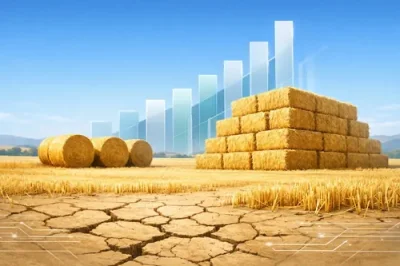
Dry Conditions and Rising Input Costs Drive Hay Prices Up in Central West NSW and Bega Valley

Farmers Face Increased Production Expenses Amidst Tightening Supply

Dry Conditions and Rising Input Costs Drive Hay Prices Up in Central West NSW and Bega Valley?w=400

The information on this website is general in nature and does not take into account your objectives, financial situation, or needs. Consider seeking personal advice from a licensed adviser before acting on any information.

Farmers in Central West New South Wales and the Bega Valley are grappling with rising hay prices, driven by persistent dry conditions and escalating input costs.
These factors have combined to tighten local supply and increase production expenses, impacting both producers and buyers in the region.

Recent reports indicate that cereal hay prices have firmed in Central West NSW and the Bega Valley as dry weather continues to prevail. The lack of rainfall has led to reduced pasture growth, compelling farmers to rely more heavily on hay to feed their livestock. This increased demand, coupled with limited local supply, has contributed to the upward pressure on prices.

In addition to the challenges posed by dry conditions, farmers are also contending with rising input costs. The prices of essential inputs such as urea and fuel have been on the rise, further inflating the cost of producing and transporting hay. These increased expenses are being passed on to buyers, resulting in higher prices for hay in the market.

Despite these challenges, some factors are helping to mitigate the impact on hay prices. Above-average rainfall in other parts of Southeast Australia has improved pasture growth, reducing immediate hay demand in those regions. Additionally, some farmers are delaying purchases while utilising green feed and on-farm stocks, which has kept trade subdued and prevented more significant price hikes.

However, the situation remains precarious for farmers in Central West NSW and the Bega Valley. The combination of dry conditions and rising input costs underscores the need for effective risk management strategies and comprehensive insurance coverage to safeguard against the financial impacts of such challenges.

Published:Tuesday, 21st Apr 2026
Author: Paige Estritori

Please Note: We do not endorse any specific products or companies. Some content is sourced from third parties, including press releases, and may not be independently verified for accuracy or completeness.

Share this news item:

Rate this article

0 Comments

No comments yet. Be the first to share your thoughts.

Insurance News

Fire Ant Concerns Add Another Layer to Farm Risk Planning
09 Sep 2026: Paige Estritori
Renewed rural attention on red imported fire ants is a timely reminder that biosecurity risk is not limited to livestock disease or crop pathogens. For Australian farm businesses, an invasive pest can create a chain of practical problems: movement restrictions, extra compliance work, damaged ground, animal welfare concerns, worker safety issues and possible disruption to harvest, transport or sales. - read more
Electronic Livestock Tags Put Farm Records Under the Spotlight
02 Sep 2026: Paige Estritori
Australia’s sheep and goat electronic identification rollout is moving from policy discussion into everyday farm management, and its insurance implications should not be overlooked. Recent rural reporting has highlighted the practical work now facing producers, agents, processors and saleyards as the industry shifts towards stronger individual animal traceability. - read more
Rising Mouse Reports Put Stored Grain and Sheds in Focus
26 Aug 2026: Paige Estritori
Reports of renewed mouse activity in parts of grain-growing Australia are a timely reminder that farm risk is not always dramatic, fast-moving or weather-driven. A gradual build-up of rodents around paddocks, hay stacks, silos, machinery sheds and grain storage can still create costly disruption, particularly where feed, seed, wiring, insulation and packaging are exposed. - read more
Wetter Outlook Puts Farm Insurance Reviews Back on the Agenda
19 Aug 2026: Paige Estritori
Fresh seasonal weather attention across rural Australia is a practical reminder that farm risk can shift quickly when rain systems become more active. For many producers, a wetter outlook is welcome after dry periods, but it can also expose weak points in insurance arrangements, maintenance schedules and business continuity plans. - read more


Farm Insurance Articles

Preparing Your Farm: 5 Key Measures Against Natural Disasters
In recent years, Australia has witnessed a notable increase in the frequency and severity of natural disasters. From bushfires and floods to cyclones and droughts, these events have become almost a regular occurrence, affecting countless communities across the nation. For farmers, these natural disasters pose a serious threat not only to their means of livelihood but also to their way of life. - read more
Protecting Your Farming Business with Keyperson Insurance
Farming is not just an occupation; it's the backbone of Australia's economy and a vital part of our national identity. From the vast wheat belts of Western Australia to the fertile valleys of Victoria, our farmers work tirelessly to feed not just our nation, but countries all over the world. Their commitment ensures food security and supports rural communities, making farming a crucial industry for Australia's prosperity. - read more
The Role of Cover Crops in Enhancing Farm Yields Sustainably
Cover crops are a diverse group of plants grown primarily for the benefit of the soil rather than for crop yield. They are planted in the off-season after harvesting the main crop. The primary goal is to cover the soil, reducing erosion and enhancing soil health. - read more
Farm Equipment Insurance in Australia: Types of Cover, Costs and Claims
Farm equipment insurance helps Australian farmers manage the financial impact of damage, theft, breakdowns and liability risks involving machinery. Because tractors, harvesters, vehicles and other equipment can be costly to repair or replace, understanding the main policy types, exclusions and claims process can make it easier to choose cover that reflects your farm's equipment, location and risk profile. - read more

Knowledgebase
Occupational Hazard:
A risk associated with the nature of a particular occupation, which may affect insurance premiums.